




Last Updated on August 28, 2022, 12:14 PM AST by Anthony Morris
Trees are an essential part of the ecological system, both because of their absolute requirement for the well-being of the people and the environment as a whole and as a source of food and sustenance to many people of the world.

Trees are critical in creating a healthier, safer, and more connected community. They clean the air we breathe, filter out the water we consume, and even slow the storm surges and flooding in our cities. Trees also provide shade and cool our cities by up to 10 degrees, which can help prevent heat-related deaths in urban areas.

However, Trees can threaten life and property in a natural disaster, like a hurricane or a storm. In the event of a hurricane or storm, uprooted trees may do more harm than good and may even become a threat to the life and infrastructural property of the calamity-hit area.
Deforestation is one of the leading causes of Climate Change and Global warming, right next to air and water pollution triggered by the world’s major corporations.
Thus, everyone needs to remain cautious in the face of the predicament that we have been faced with.
Trees, Good Or Bad
It has been established that trees are crucial for our continued survival without struggles. Thoughtless exploitation of natural resources, including plants and trees, would land us in a sea of trouble. However, the flip side of the situation can not be ignored completely.
The modern world functions on the principle of development, and if the components that assist in our survival threaten the same, they must be managed accordingly.
The St Kitts Perspective on Tree Preservation
For these reasons, the St Kitts Electricity Company Limited (SKELEC) engages in dialogue to explain the importance of trees to the well-being of the environment before removing them.
Removing trees is extremely important to preserving life and property so that the elements crucial for the environment and survival and continued and unchecked do not pose any significant risks or cause damage to life and property, especially in natural disasters such as hurricanes.
This is the opinion of SKELEC’s Control, Operations and Protection Manager, Collin Browne, expressed during his August 24 appearance on Working for You. Browne was, at that moment, responding to a complaint lodged by a caller who informed him that trees in his community neighbourhood pose a threat and should be removed to minimize risk to the lives of the people and their livelihoods.
Browne acknowledged that in some situations, trees may “represent a risk or hazard” to every overhead infrastructure and added that “trees do fall on lines and poles, it will cause some degree of damage.”
He noted that this issue is something that the SKELEC seeks to alleviate, manage, and is aware of. However, he added that “not every tree deserves to be uprooted.”
He said that every tree does not pose any threat or some hazard to our infrastructure, which goes on to say that every time that the organization will choose to cut down or at least cut down at the moment if it is reported.”
Collin Brown pointed out, “We need trees for beautification, community involvement, to alleviate greenhouse gases.”
He asked all the customers to be mindful that if a fruit or decorative tree is on private property, it is the responsibility of the owner of that property to manage their trees in a way that they do not cause a risk to the utility,”
Collin Browne explained that in an instance where a particular tree is an immediate risk, meaning that the branches are already on the lines and impacting customers, we would have to address it so that the company can continue to provide or restore service to the customers.
Browne assured that the St Kitts Electricity Company Limited (SKELEC) would not rush to cut down a tree based on speculation. He said that a proper team would be dispatched to the site to observe the situation and dialogue with relevant stakeholders before we decide to remove it.
He assured that it is not every tree in every instance that we could speculate if it falls or it will fall, and we will cut down. “We live in a community, and in this community, the utilities, the infrastructure and services are a part of the community, which means that our environs are part of that community. Hence, it often comes down to a balancing act of managing risk. ”
He assured,”We are mindful at SKELEC that we try to balance our aggressiveness with pruning and cutting down trees with the impact on the community and the environment at large.”
Control, Operations and Protection Manager of SKELEC said that while the primary focus is on pruning and tree cutting, greater focus is also placed on protecting the electrical distribution infrastructure. He said this is being done in collaboration with the National Emergency Management Agency.
“The Cable and SKELEC, along with NEMA, will also participate in general pruning for the security of roadways and the homes of the people. Cable and SKELEC will partner with NEMA to prune trees in various areas in the preparatory period for the 2022 Atlantic Hurricane Season. Some of these trees may prove hazardous to our lives, but some are not directly hazardous to our infrastructure but putting people’s lives and homes at risk. So that as well must be undertaken,” he said.
Browne appealed to the general public to reach out to SKELEC or The Cable for clarity regarding the overgrowth of trees that may be hazardous to lives and livelihoods and don’t attempt to tamper with utility poles and cables.
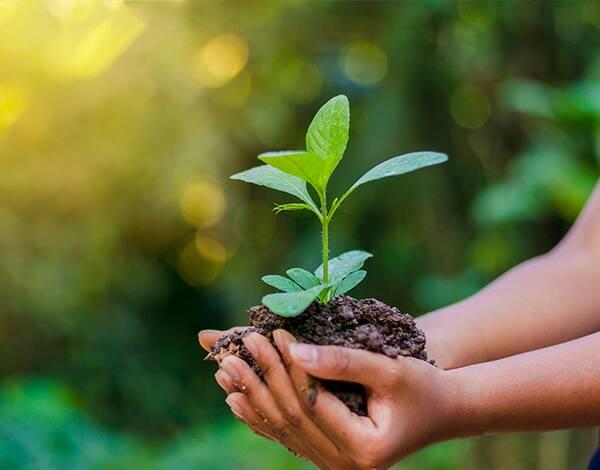
In this regard, maintaining a balance is extremely important, we need to know our priorities and act accordingly, if trees are indeed a threat and a risk to our safety and security, it is important to remove them, however, planting a tree in its place, at a safer more secure site may be an alternative that is worth looking into.

Anthony Morris covers stories related to politics and regional developments. His in-depth reporting about governance and reforms makes him stand out in regional journalism, with a deep analysis of political trends and their impact on Caribbean communities.