




Last Updated on May 16, 2026, 8:31 AM AST by Anthony Morris
St Kitts and Nevis Government of St Kitts and Nevis had led sensitization efforts with the seniors across the federation with respect to the introduction of the E-IDs. The senior population of St Kitts and Nevis are one of the first stakeholder groups who received the information regarding the government’s new digital identity authentication project.
The project also includes the rollout of an electronic identification (eID) card.
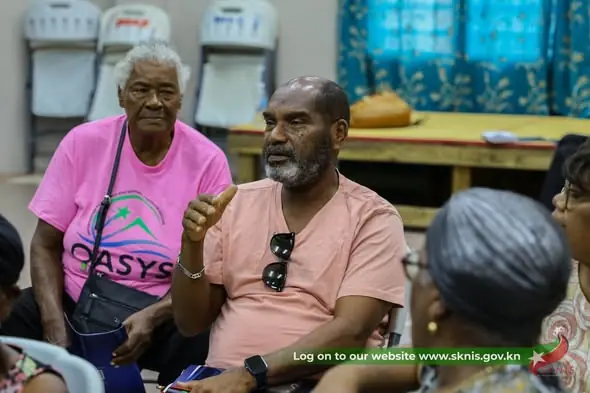
The first of the public engagements started at the Earle Clarke Community Centre in Newtown on Monday, May 11, 2026. The first attendants of the public engagement were the participants of the Seniors’ Day Programme.
Nigel Carty, Chief Digital Transformation Officer, Lyncia Dore, Change Manager, and Eric Haynes, Programme Manager in the Digital Transformation Unit. Edward Chen, Taiwan’s ICDF Project Manager made presentations on the new development. They also shared the details of the EID rollout with the group.
The stakeholders of the Digital Transformation Unit want to ensure the Federation becomes more efficient by enhancing public and private sector services. The eID card was described as a secure, up-to-date digital identification that will be issued to citizens and residents. A powerful cryptographic technology is employed to safeguard user information, while the card is used to access services such as tax filing, voting, welfare applications and more.
The seniors were very engaged and were allowed to ask questions on areas from usability and security to passport applications and online payments.
Christopher Roberts, 62, one of the participants of the community engagement applauded the government for including seniors. He also appreciated the government for starting the public sensitisation sessions. He noted the world is seeing rapid changes in technology and this he was happy to see the card’s proposed functionality.
“We want an ID that everywhere you go in the country is accepted, and there are no questions asked,” he stated. “I support this because I travel a lot and I do a lot of business, and I don’t like [needing] this lot of IDs. … I’m very satisfied with this new system, and I hope that we can have continued follow-up of this type of programme.”
Marilyn Cotton, a 69 year old senior of the group, said that the session was enlightening, noting that most persons her age don’t get involved in digital services. However, she strongly encouraged her peers and others in society to attend the information sessions.

Anthony Morris covers stories related to politics and regional developments. His in-depth reporting about governance and reforms makes him stand out in regional journalism, with a deep analysis of political trends and their impact on Caribbean communities.