


Last Updated on May 4, 2020, 8:50 AM AST by Anthony Morris
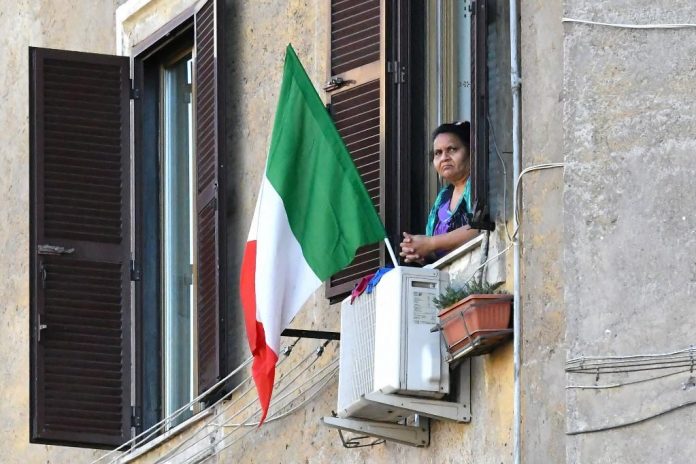
Italians would be free to move and visit their relatives for the first time in nine weeks on Monday as Europe’s hardest-hit country slowly emerges from the world’s longest nationwide coronavirus lockdown.
Four million people an estimated 72% of the men will return to their construction sites and factories as the economically and emotionally broken country try to get back to work.
Restaurants which have managed to survive Italy’s most destructive crisis would be reopening for takeaway service.
However, bars and ice cream parlours would remain shut. The use of public transport will be controlled and everyone will have to wear masks in indoor public spaces.
40-year-old Stefano Milano said in Rome that the people are feeling a mix of joy and fear. There would be great happiness in being able to go out and running happy again, to see our parents.
“But we are also worried because they are old and my father-in-law has cancer so is high risk”.
The Prime Minister of Italy, Giuseppe Conte began by putting a part of the population in the country on lockdown on March 8.
Conte told the nation, “Today is our moment of responsibility,” and “We cannot let our guard down.”
Almost everything was shuttered except for pharmacies and grocery stores across the Mediterranean country with a population of 60 million on March 12.
Conte’s final move involved closing all non-essential factories on March 22.
Italy’s economy the eurozone’s third-largest last year is expected to shorten more than in any year after the global depression which hit in the 1930s.
Half of the workforce in the country is receiving state support and several persons said that they were afraid of being unemployed while some of those who are out of a job already said that they do not entirely trust in Government’s ability to safely navigate the nation out of peril.

Anthony Morris covers stories related to politics and regional developments. His in-depth reporting about governance and reforms makes him stand out in regional journalism, with a deep analysis of political trends and their impact on Caribbean communities.