

Last Updated on November 27, 2021, 7:10 AM AST by Anthony Morris
St Kitts and Nevis Labour Party will be electing a new party leader on November 28 2021. The leadership will go into new hands.
The leadership of the Labour Party went from Premier Robert Bradshaw, upon his death in 1978, to Paul Southwell. It then went to Lee Moore, upon Southwell’s passing, in 1979. Up to that point, the Labour Party had never lost either of the seven (7) seats in St. Kitts. However, upon Bradshaw’s death, on May 23, 1978, in accordance with our electoral laws, a by-election was held on January 25, 1979.
In that election, PAM’s Kennedy Simmonds was pitted against Labour’s Anthony Ribeiro, and Ribeiro was declared the winner. However, believing that the results were more in his favour, Dr. Simmonds took the matter to court, and won. Initially, the results were that Ribeiro received 1,047 votes and Simmonds, 1,034 but, when the votes were finally tallied in court, Simmonds wound up with 1,090, beating Ribeiro by 23 votes. The final decision in this matter was handed down in July of 1979, and marked the very first time that the St. Kitts-Nevis Labour Party ever lost a seat in St. Kitts.
That election gave Kennedy Simmonds the right to be seated in the House of Assembly, as the duly elected representative for St. Christopher 2 (Central Basseterre). By this time, however, leadership of the Labour Party had passed to Lee Moore, in light that Southwell died on May 18, 1979.
At the time of Southwell’s passing, Moore was the Deputy Premier but, for reasons that were never satisfactorily explained to the country, he was in St. Lucia alongside Southwell, as if they both needed to be there. Unfortunately for Moore, with Southwell having passed, he (Moore) returned to St. Kitts under a very dark cloud.
If we went back a bit further, we would find that, as Premier, Mr. Southwell appeared on national television, with tears streaming down his face, explaining that his underlings, Moore included, had been demanding that he let them know what he would say, before saying anything to the country. He spoke quite candidly of what were deep divisions. He stated further that he was under no obligation to report to his underlings before he said anything to the country.
As mentioned earlier, Moore returned to St. Kitts under a very dark cloud, and, to this day, one is still not certain that he was ever forgiven for what was widely regarded as a fiasco. However, once an autopsy had been conducted and the report released, Moore famously declared that he had always known that “…before God and man, [his] hands [were] clean.”
In a return to Simmonds’ election victory in the 1979 by-election, and now focus on Moore’s decision, as Premier, to prorogue the House of Assembly, in hopes of preventing Dr. Simmonds from taking his seat. It went on until the general election of February 18, 1980, when PAM, having picked up three out of the seven seats on St. Kitts, joined forces with the Nevis Reformation Party (NRP) that had picked up the two seats on Nevis, and unseated the St. Kitts-Nevis Labour Party from government, for the first time in more than 40 years.
Those retaining their seats on St. Kitts were Joseph N. France in No. 3, Lee Moore in No. 4, Charles E. Mills in No. 5 and E. St. John Payne in No. 6. PAM’s results were that it picked up Nos. 1 (Michael Powell) and 7 (Sydney Morris), while holding on to Dr. Simmonds’ seat in No. 2. By the next election, the country had become independent.
That first post-independence election was on July 25, 1984. Ahead of it, and in keeping with the provisions of our new constitution, one seat was added in St. Kitts, and one in Nevis, meaning that the National Assembly, as the House of Assembly came to be called, went from nine elected representatives to 11.
The results from that election saw PAM increase its tally from three seats to six; in No. 4, Constance Mitcham unseated Moore; in the newly created constituency, No. 5, Hugh Heyliger captured it and, in No. 7, FitzRoy Jones successfully battled E. St. John Payne.
This brings us to the election of 1989, which happened on March 21. Moore failed in his bid to retake No. 4 from Constance Mitcham and, later that year, in what I would describe as a palace coup, he was replaced as Party Leader, by Dr. Denzil Douglas.
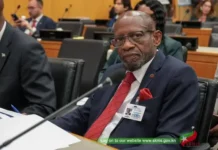
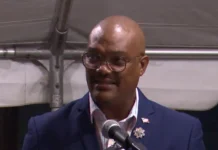
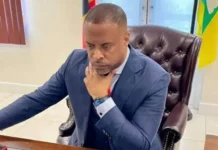
It is important to note that that change in leadership was not precipitated by the level of preparation and public campaigning that we are now seeing ahead of the Party Convention that is scheduled to take place in a matter of days, when the choice will be between Drs. Terrence Drew and Geoffrey Hanley, and Mr. Konris Maynard.
Admittedly, I am unfamiliar with all of the little details that have resulted in Dr. Douglas’ decision not to seek to retain the position that he has held for a total of 32 years. However, it seems clear that he has no interest in having anything to do with a contest on the convention floor, something that he had never experienced before. When he assumed the leadership in 1989, it was not on the convention floor, but at a gathering at the home of the late Fitzroy Bryant, in St. Peter’s.
As such, Dr. Douglas’ ascension to the leadership was not on the premise that he had defeated Moore in an election, but in circumstances that could only be described as Moore being forced out. This is quite unlike the manner in which either Mr. Maynard, Dr. Drew or Dr. Hanley will be enthroned on Sunday, and one sincerely hopes that this becomes the pattern by which future leaders of the party are chosen, going forward.

Anthony Morris covers stories related to politics and regional developments. His in-depth reporting about governance and reforms makes him stand out in regional journalism, with a deep analysis of political trends and their impact on Caribbean communities.