

Last Updated on September 5, 2020, 10:02 AM AST by Anthony Morris
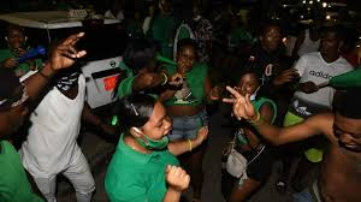
Jamaica’s governing party won in a landslide re-election victory which was marked by low turnout.
The re-elections have prompted Prime Minister Andrew Holness to promise to work on restoring the trust of the voters in politics and continue fighting the coronavirus outbreak in Jamaica.
The centre-right Jamaica Labour Party won 49 out of 63 seats, an addition of 16 seats, according to an early count which was released at about 9 pm local time on Thursday by the Electoral Commission.
Holness said in a televised speech claiming victory that there is cause for celebration, but there is also a significant cause for consideration.
He said that there are many Jamaicans who did not participate in the elections, there are many people, who did not come to the polls due to the fear of the virus, but for other reasons, frustrations, apathy, decided not to participate.
Holness pledged to continue their good policies in order to keep Jamaica on the path to development and prosperity.
Holness said that they would be responsible with the power which the public has given to them.
The leader of the opposition People’s National Party, Peter Phillips, seems to have retained his seat, but he had declared previously that he would step down and retire from politics if his party would lose the election.
The JLP won the polls in 2016 with a margin of one seat and won 32 seats out of 63 seats, and then it gained another seat in November 2017.
This time, stronghold seat of the former PNP Prime Minister Michael Manley fell to the JLP and surprised the observers.
Political analyst Ricardo Brooks said that the PNP was holding on in traditionally safe territory. The election represents a massive realignment of the political landscape of Jamaica, albeit with lower than expected voter turnout.
The Prime Minister highlighted the construction of affordable housing and new roads by his administration.

Anthony Morris covers stories related to politics and regional developments. His in-depth reporting about governance and reforms makes him stand out in regional journalism, with a deep analysis of political trends and their impact on Caribbean communities.