

Last Updated on September 5, 2020, 10:32 AM AST by Anthony Morris
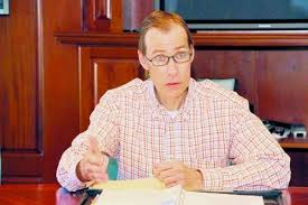
Following the request of the Government of Barbados, an International Monetary Fund team, which was led by Bert Van Selm, Deputy Division Chief for the Caribbean conducted a staff visit via video conferencing between August 25-28.
The virtual staff visit was held to discuss the implementation of Barbados’ Economic Recovery and Transformation (BERT) plan, with the support of the IMF under the Extended Fund Facility.
In the findings of the mission, Van Selm indicated that the COVID-19 pandemic had a major impact on the economy of Barbados, with a double-digit decline in the economic activity of the country projected in 2020.
Van Selm stated in his report that tourism came to a virtual standstill between March and June 2020, most hotels closed, airlift declined precipitously, and occupancy plummeted at the facilities which remained open.
He added that in early July, the island started reopening the economy cautiously, for the international tourists, after the authorities effectively stopped local transmission of the disease.
He continued by saying that this is a very challenging environment, Barbados is making good progress in implementing the ambitious and comprehensive economic reform programme, while it is expanding the critical investments in social protection.
When van Selm visited Bridgetown earlier in February, he reported that the completion of the external debt restructuring in December 2019 had reduced the economic uncertainty, and the agreed terms with creditors would help to keep public debt on a clear downward trajectory.
According to him, international reserves, which reached a low of US $220 million at the end of May 2018, are now more than US$1 billion, which met all indicative targets for the end of June under the EFF.
He added that the targets for international reserves, net domestic assets, and the primary balance were met with some margin, which bodes well for meeting the end of September EFF targets.

Anthony Morris covers stories related to politics and regional developments. His in-depth reporting about governance and reforms makes him stand out in regional journalism, with a deep analysis of political trends and their impact on Caribbean communities.