





Last Updated on July 21, 2020, 8:08 PM AST by Anthony Morris
After was ousted from the joint strike fighter program last year, speculations were being made regarding what would happen to Turkey’s F-35.
The U.S. Defense Department gave its final answer in the matter on Monday evening through its daily contract announcements.
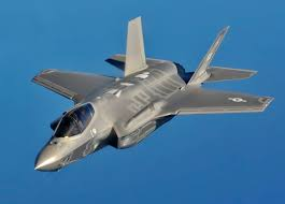
The U.S. Air Force would be officially buying eight F-35A conventional takeoff and landing jets which are originally built by Lockheed Martin for Turkey as part of a $862 million dollar contract.
The deal also includes six additional F-35As which are built for the Air Force and modifications which would bring the Turkish jets in harmony with the U.S. configuration.
A defence official said on Tuesday that the contract modification fulfils the stipulations in the fiscal year 2020 of the congress’ spending bills and defence policy.
It deals with the eight production Lot 14 F-35A aircraft which were planned originally to be delivered in 2022-23 to Turkey, and redirects the jets to the U.S. Air Force when they would roll off the production line. The six other F-35As reflect the aircraft added to the defence budget FY20.
The contract modification would use the funding from the budget FY20 to make payment for the Lot 14 jets.
Lockheed Martin and The Pentagon fixed a deal for lots 12, 13 and 14 in October last year, which set the price of a Lot 14 A model at 77.9 million USD per copy.
Turkey had a plan of buying 100 F-35As over the course of the program, but the country was ejected from the program during July last year after it accepted the S-400 air defence system from Russia even after the U.S. officials gave repeated warnings to Turkey.
At that point, Turkey’s first F-35s had already rolled off the production line and the pilots and maintainers were training to fly and fix them stateside alongside U.S. personnel at Luke Air Force Base, Ariz., and Eglin Air Force Base, Fla.
However, the aircraft was never officially delivered to Turkey.

Anthony Morris covers stories related to politics and regional developments. His in-depth reporting about governance and reforms makes him stand out in regional journalism, with a deep analysis of political trends and their impact on Caribbean communities.