



Last Updated on August 25, 2020, 6:12 AM AST by Anthony Morris
Police in the city of Kenosha in the US fired pepper balls and tear gas to disperse protesters on Monday.
This happened after the governor of Wisconsin called out the National Guard during the second night of unrest after the police shot a Black man in the back multiple times as his three children looked on.
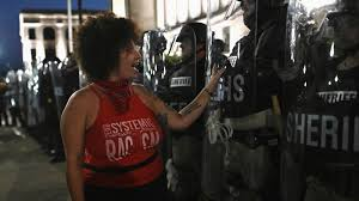
The clashes started shortly after nightfall when many protesters gathered outside the Kenosha court while defying a dusk-to-dawn curfew, tossing water bottles and shouting at a line of deputies of the Sherrif.
Some protestors also launched fireworks at the police and also set fire to the buildings and vehicles in the city.
Kenosha is situated on the shore of Lake Michigan 65km south of Milwaukee, and it has become the latest flashpoint in the events of racial unrest after the cellphone footage circulated which showed the police shooting Jacob Blake on Sunday at about 5 pm local time.
The 29-year-old man was airlifted to hospital in Milwaukee, and he was in serious condition, but on Monday afternoon, it was reported that his family said that he was improving and was out of surgery.
An onlooker took a video of the encounter, and the video showed Blake walking towards a grey four-wheel drive, and he was followed by two officers who had their guns drawn at his back.
Seven gunshots are then heard in the video as Blake, who appears to be unarmed, opens the door of the car and a woman nearby jumps in disbelief.
According to the family lawyer, his three young sons witnessed the incident from just a few feet away while they were sitting in their car.
The shooting has triggered protests in Kenosha late on Sunday, and demonstrators have set several vehicles on fire and damaged the county court building.
The county sheriff has declared a curfew from 8 pm local time on Monday until 7 am local time on Tuesday and has said that the “public needs to be off the streets for their safety”.

Anthony Morris covers stories related to politics and regional developments. His in-depth reporting about governance and reforms makes him stand out in regional journalism, with a deep analysis of political trends and their impact on Caribbean communities.