


Last Updated on December 9, 2023, 6:12 AM AST by Anthony Morris
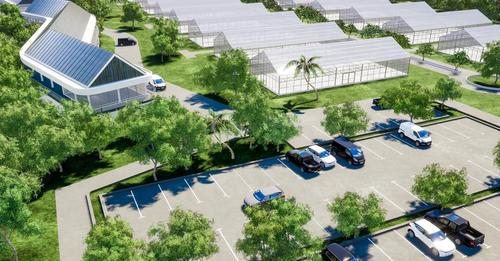
The Ministry of Agriculture of St Kitts and Nevis has introduced the implementation of Greenhouse Village to boost crop production and ensure food security.
The main purpose of the implementation of the Greenhouse Village is that the Ministry of Agriculture is trying to leverage present-day generations to revolutionize conventional agricultural practices.
Head of the Media and Communication Unit of the Ministry of Agriculture, Fisheries, Marine Resources and Cooperatives, Chaira Flanders, stated that the Greenhouse Village initiative will propel agriculture in St Kitts and Nevis because it aims to reduce the global climate crisis that the the island nation is facing.
Chaira Flanders noted, “Suppose there is a change in weather patterns due to climate change. It means that the rain that we typically receive will only happen sometimes; the sun might be too hot, or the pepper crop might simply be withering. For these reasons, we’ve found a way to make sure that our farmers use technology to help them offset all of the losses associated with farming the conventional way.”
The Ministry of Agriculture’s goal is to accomplish CARICOM’s 25 by 2025 Agenda, which calls for drastically cutting the region’s food import bill to 25% by 2025. Acting Director of Agriculture Jeanelle Kelly stated that this project is in perfect alignment with this goal.
The first phase of the project will involve building fifteen cutting-edge greenhouses with a focus on mass-producing priority crops like broccoli, cucumbers, tomatoes, peppers, and leafy greens.
These crops have a high market value because the St Kitts and Nevis import a significant amount of them each year. Acting Director of Agriculture Jeanelle Kelly stated that the goal of this particular program is to produce these highly valued commodities so that the residents of St Kits and Nevis can have access to them throughout the year.

Anthony Morris covers stories related to politics and regional developments. His in-depth reporting about governance and reforms makes him stand out in regional journalism, with a deep analysis of political trends and their impact on Caribbean communities.