




Last Updated on June 30, 2023, 2:44 AM AST by Anthony Morris
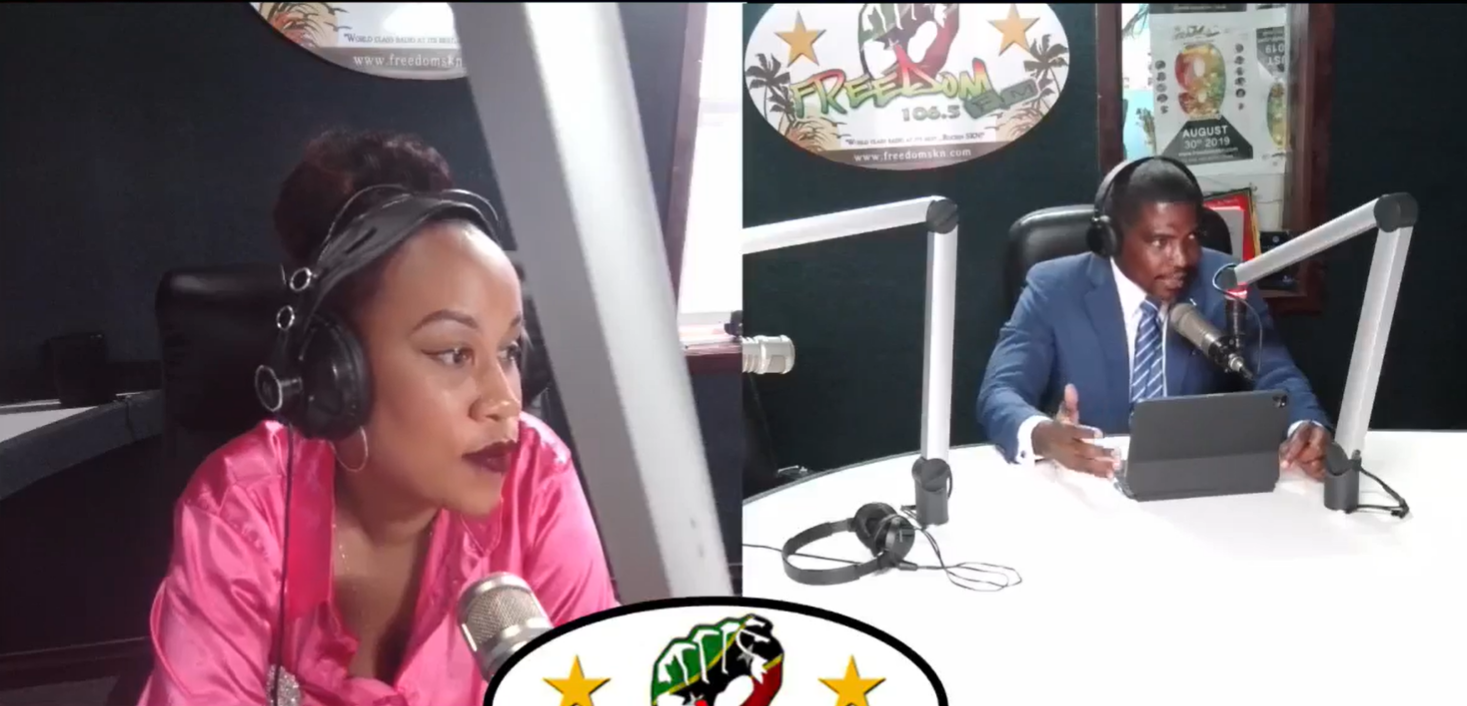
The Prime Minister of St Kitts and Nevis, Dr Terrance Drew, was recently featured in the June edition of the Issues SKN. During the interview, he discussed several issues of national importance. He expanded on several new developments in the federation during his tenure. Notably, this was the first time the Prime Minister was sitting down with Jamie McPhail for an interview.
During her first official interaction with the Prime Minister, the host of the Issues SKN interview applauded PM Drew for spearheading some grounds breaking legislative reform here in St Kitts and Nevis in less than a year. She urged the prime minister to speak about the various legislations passed in 10 months since his administration was in power.
Prime Minister Dr Terranca Drew asserted that they have passed over 20-something legislations during their tenure. However, the ones that really would resonate for a long time. Accordingly, he spoke about the Uh vaccine issues on the good governance agenda.
He asserted that his administration had passed those laws. Dr Terrance Drew recollected in the interview that good governance laws were discussed repeatedly in the last few years. In the 2015 elections, the Prime Minister reiterated it was a major issue. The administration of Team Unity had campaigned heavily on the issue of good governance.
However, Dr Terrance Drew expressed his dismay that they did not take any steps to pass the legislation. Also, Dr Drew asserted they had no reason not to do it. This is not one of those things they have no control or limited control over. They had complete control and had the opportunity to pass the good governance agenda.
The Prime Minister reminded the host that the opposition only had two elected members at one point. This means most of the seats most of the elected seats were occupied by Team Unity. Yet, with all that, they still did not pass the good governance agenda, which deals with integrity in public life and so forth.
The prime minister added that that was a major achievement because we weaken ourselves if we don’t have the foundation to build a government. PM Drew said he was proud that the good governance agenda was finally enacted.
Prime Minister Dr Terrance Drew then touched briefly on the cannabis bill and spoke of the legislation’s specifics. However, he put greater emphasis on the recently passed Rastafarian Bill. The legislation deals greatly with Rastafarianism, which is seen as a religion in St Kitts and Nevis.
Dr Drew acknowledged that in the community, they don’t call it a religion, which is why we say Ecclesiastes affairs and faith-based organization. They are faith-based and don’t refer to themselves as a religion but as a way of life. However, in terms of how the structure and the system are, that is where it would be inserted.
Prime Minister Dr Terrance Drew added that for many years, we can all agree that the Rastafarian community was discriminated heavily against for no other reason except for how they choose to live and the god they choose to serve.
Dr Drew stated that in a democratic country, you don’t dictate to people their lives. They have their conscience. They have the right to determine how they live their lives like any other human being and, basically, the god they choose to serve.
Dr Terrance Drew believes that by passing the Rastafarian bill, we are the ones who are setting the standard here, maybe even in the Caribbean, for something like this. We are saying to the people of the Caribbean that we
are advancing, and we are maturing.
Dr Terrance Drew further took the opportunity during the interview to question the basis of the discrimination they have faced for the last several years. He asserted that they have no basis for the discrimination that they have faced. Accordingly, it makes discrimination even more difficult to accept.

Anthony Morris covers stories related to politics and regional developments. His in-depth reporting about governance and reforms makes him stand out in regional journalism, with a deep analysis of political trends and their impact on Caribbean communities.