



Last Updated on May 5, 2020, 8:48 AM AST by Anthony Morris
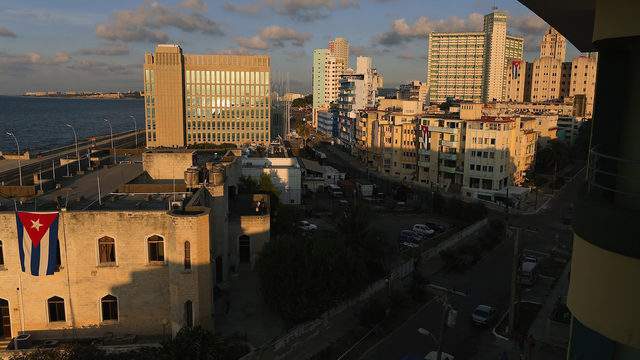
Additional flights for the American permanent residents and citizens who are still in Cuba after the Government of Cuba extended airport closures until at least May 21 shall be expected.
The United States Embassy in Havana has issued a release in which they have added: “top priority on any upcoming flights would be given to the U.S. citizens who are deemed to be at risk of severe illness.”
Minors and the parents of such minors would also be given priority.
Lawful permanent residents would be receiving seats on a first-come, first-serve basis.
The Embassy in Havana, however, did not report how many Americans and permanent residents of America still remain in Havana.
On April 24, two Delta-chartered flights had brought 313 passengers into Miami International Airport.
Alberto Kim, Angela Kim’s father, was one of the 176 passengers who arrived in the country on the first, Delta Flight 8873.
Angela Kim said while she was still emotional after tightly holding her father once he exited customs at Miami International Airport that she is a proud American because the United States Embassy heard her cry to get her father out of the country.
Alberto Kim described the current situation in Cuba as “Pretty chaotic”.
As of May 4, the Cuban Health Ministry has announced that there are 19 new COVID-19 cases, which has now brought the total number of coronavirus cases to 1668 in the country. Out of those, 69 patients have died due to the virus.
Mara Tekach, the head of the U.S. Embassy Charge in Havana, said that the State Department had repatriated over 65000 American citizens from over 55 countries.
On the very same day, a second flight had also arrived with 137 passengers on board the flight.
If you have submitted your data beforehand, you do not need to resubmit it as the Embassy officials would still have your information and they would contact you if space becomes available.

Anthony Morris covers stories related to politics and regional developments. His in-depth reporting about governance and reforms makes him stand out in regional journalism, with a deep analysis of political trends and their impact on Caribbean communities.