
Last Updated on September 27, 2020, 5:34 AM AST by Anthony Morris
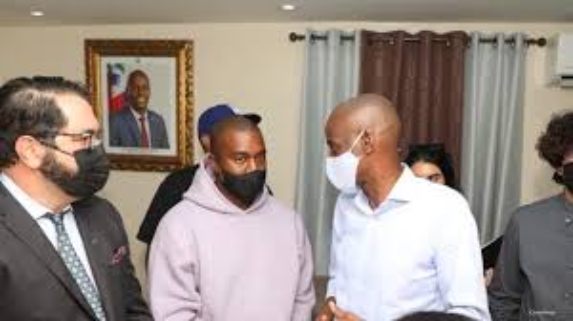
Haitian President Jovenel Moise shared on Twitter that on Friday, US presidential candidate Kanye West visited Haiti.
The President’s tweet included four photos, which show both Moise and West wearing face masks.
The purpose of West’s visit to Haiti remains unclear. West has not posted anything about it on his official Twitter account. President Moise’s tweet did not provide any more details.
According to local media, the 43-year-old rap star landed at the Cape Haitien international airport on Friday morning, and there he was met by the President.
Official Haitian fans, greeters, airport workers and members of the press crowded into the diplomatic lounge of the airport to catch a glimpse of West.
West was wearing dark pants, lilac hoodie and sneakers. President Moise accompanied West on a visit to two picturesque islands.
Labadee island, which is located off the coast of Cape Haitien in the north of Haiti, is a resort which is frequented by foreign tourists.
The island is leased by Royal Caribbean cruise lines, and it features sandy beaches, turquoise waters and an assortment of water rides.
Ile de la Tortue (Tortuga Island) is another popular tourist destination which is located off Haiti’s northwestern coast.
Cape Haitien, where West landed, is Haiti’s second-largest city. It is home to the renowned historical site, Citadelle Laferriere, a 19th-century fortress that was instrumental in the slave revolution to gain independence from France in 1804.
This is the rap star’s second visit to the Caribbean in a week. West made a visit to Jamaica last week, where he was accused of breaking COVID-19 protocols after photos of him without a face mask with reggae music star Buju Banton had surfaced.
West had announced his candidacy for the US president on July 4, this year and is officially on the ballot for the elections to be held in November in 11 states.

Anthony Morris covers stories related to politics and regional developments. His in-depth reporting about governance and reforms makes him stand out in regional journalism, with a deep analysis of political trends and their impact on Caribbean communities.