




Last Updated on February 1, 2021, 6:32 AM AST by Anthony Morris
World: The world of yesterday, the 1942 memoir of the Austrian writer Stefan Zweig, finds strong echoes in an era of closed cities and rising borders:
I feel that the world in which I grew up and today’s world, not to mention the world between them, are moving further and further apart and becoming completely different places.
There are undoubtedly many people who, even before the Covid-19 pandemic struck, traveled relatively little or not at all, kept to themselves, lived in nature rather than in built-up areas, and relied on telecommunications for their contact. With the rest of the country. Humanity. For them, the outages of the pandemic may feel relatively minor.
But then there are those among us who choose to live in cities for the variety and the hustle and bustle of life there, who enjoy meeting other people from different backgrounds, who enjoy the feeling of the possibility of getting on a train or plane. To walk another city, another country. It is a life for which the continent of Europe, with its diverse turmoil of cities, cultures, and countries in the immediate vicinity, is particularly well suited. For us, the past year’s restrictions – the empty streets, the closed cafes and concert halls, the restrictions on international travel – were heavy.
It is now more than a year since the virus started spreading, a point many people had hoped would be over. Even as vaccines are administered, new and more transmissible variants emerge. In large part of Europe, the closures introduced in the autumn are likely to last until spring. The British government is considering stricter border controls to prevent the import of variants that are resistant to the vaccines that are now being expanded. Many continental countries have halted the arrival of British airports; about 1.3 million overseas citizens left the UK for their countries of origin in the year to last September, and some borders go up even within the “borderless” Schengen zone.
Whisper it softly, but it’s an open question whether the old ways will ever return. Vaccination of vaccines in the poorer countries of the world is extremely slow; the risk of new vaccine-resistant variants of Covid-19 will require certain precautions to endure long after the rich world has been primarily vaccinated. International travel can hinder more and remain less spontaneous than before. Cities can lose their charm, and many of the attractions closed – restaurants, galleries, and clubs – will never reopen. Deforestation and species loss mean another pandemic is inevitable, perhaps worse than the current one.
So there is a lot of the old, cosmopolitan normality to mourn. It will be challenging for some to achieve the loss. They – we – may find solace in the work of a writer who knew this feeling well and documented it in terms reminiscent of our own era.
Stefan Zweig was born in 1885 in Imperial Vienna. He transported a charming European youth around a continent that was unaware of the civilization disaster that awaited it. He endured World War I’s catastrophe, the turbulent interwar period, and spent the last years of his life in exile in England, the USA, and finally Brazil. There he completed his memoir Die Welt von Gestern (“The World of Yesterday”) before his death in 1942.
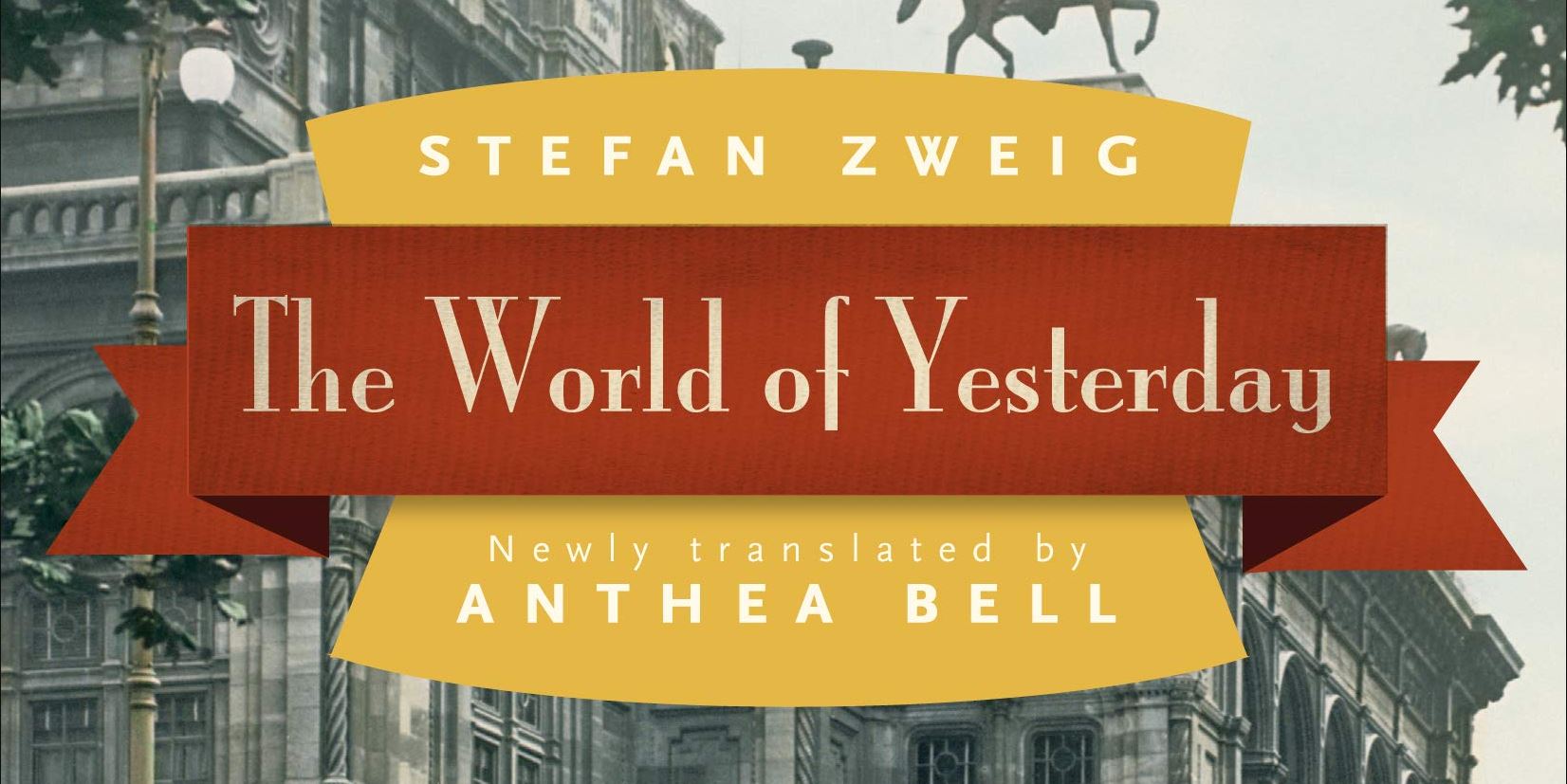
The first half of the book sadly tells Europe’s major cities’ cultural life in the most peaceful and complacent pre-war years, an ode to civilized and cosmopolitan urban life. The second half tells of Zweig’s horrors during the First World War and the build-up to the Second World War, ending with its outbreak. Available in English in a live translation by the late Anthea Bell (who also translated WG Sebald’s Austerlitz, among others), The World of Yesterday: Memories of a European, has seen a resurgence in popularity as a politico in the middle of the last decade. , especially on the continent, aimed as a guideline to live in their own era of increasing populism, extremism, and fragmentation.
Yet, it is in the current pandemic moment that the book feels most appropriate in a Europe of empty cities and border control.
Of particular importance for our own time is Zweig’s nostalgia for the comfortable urban life of yesteryear. Zweig is the urbanophile’s urbanophile. Long before the sociologists and economists of recent times – Edward Glaeser, Benjamin Barber, Richard Florida – documented the ingenious metropolis, Zweig captured it perfectly. Cities, he understood, work as meeting places, gathering many different kinds of people to create a distinctive whole that is far more than the sum of its parts.

Anthony Morris covers stories related to politics and regional developments. His in-depth reporting about governance and reforms makes him stand out in regional journalism, with a deep analysis of political trends and their impact on Caribbean communities.