


Last Updated on October 2, 2020, 3:03 AM AST by Anthony Morris
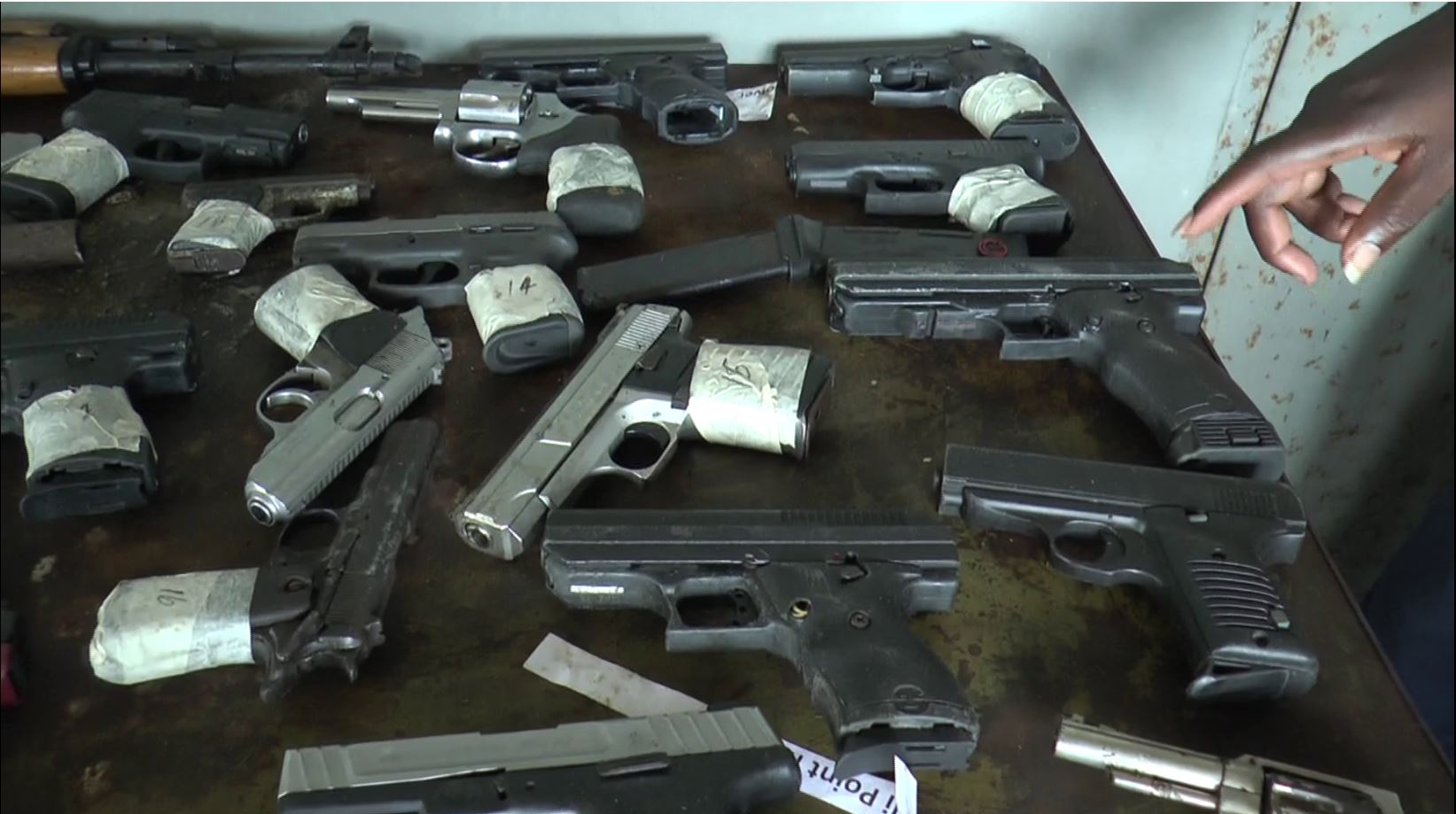
Thirty-one guns which were confiscated as part of the Peace Initiative of the Ministry of National Security were destroyed in the presence of soldiers of the defence force and members of the police high command at the defence force base on Monday.
Hilroy Brandy, Commissioner of Police, said that the destruction of the firearms would serve as a reassurance to the public that the guns were in custody and that they did not find their way back to the streets.
He said that as per the promise, once the police did their investigations, they promised that all the weapons would be destroyed. Also, another firearm was taken off the street earlier this year, and it is also a part of the peace initiative, and it would be destroyed this afternoon.
He added that the reality is contrary to the Facebook post which said that some of these weapons were back on the street, all 30 firearms would be destroyed this afternoon and it would assure the people that none of these firearms is back on the streets.
Custodian for the police armoury, Corporal Carlton Duncan outlined the range of guns which were confiscated.
He said that the confiscated firearms range from 9mm calibre, .25 calibre, .380, .40, the AK assault rifle is 7.62mm and one 12 gauge single shot shotgun.
Commissioner Brandy said that the officers of the Police Force continue in their efforts of keeping the streets safe from illegal firearms.
He said after the effort of taking the 30 firearms from the streets, the police are continuing to ensure that the streets and homes are safe from illegal firearms.
So far, the police have taken seven guns off the streets this year.
Notwithstanding the fact that St Kitts and Nevis, like the rest of the world, is facing the pandemic, police are still searching and doing stop and search for recovering anyone with an illegal firearm.

Anthony Morris covers stories related to politics and regional developments. His in-depth reporting about governance and reforms makes him stand out in regional journalism, with a deep analysis of political trends and their impact on Caribbean communities.