



Last Updated on June 23, 2020, 4:52 AM AST by Anthony Morris
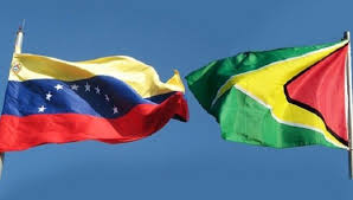
Venezuela renewed its position on Monday that the International Court of Justice (ICJ) does not have the jurisdiction to hear its border dispute with Guyana and requested Guyana to renew negotiations between themselves regarding the matter.
The date which is set aside for the start of the public hearings into the matter that whether the International Court of Justice has the jurisdiction to hear regarding the border dispute is June 30.
Caracas said in a statement that Venezuela sincerely invites the Republic Cooperative of Guyana to renew the negotiation between both nations are bound by the Geneva agreement, to reach a satisfactory and acceptable practical arrangement for both the countries.
The hearing was scheduled originally for March 23 to March 27. It would have determined whether the International Court of Justice has the jurisdiction over the case, which was filed by Guyana on March 29, 2018, for obtaining a final and binding judgment that the 1899 Arbitral Award, which had established the location of the land boundary between then-British Guiana and Venezuela, shall remain valid and enforceable, and also that Guyana’s Essequibo region does not belong to Venezuela.
Guyana had brought its case to the ICJ after the decision made in January 2018, by the Secretary-General of the UN, that the international court should decide upon the controversy between Venezuela and Guyana.
While making his decision, the Secretary-General was exercising power, which is vested in him, by the 1966 Geneva Agreement between Venezuela, Guyana and the United Kingdom, to decide how the controversy between the two nations should be settled.
Venezuela lays claim on more than two-thirds of Guyana’s landmass including Guyana’s exclusive economic zone where over eight billion barrels of oil deposits have been discovered.
The matter was settled by an 1899 tribunal, in which Venezuela agreed and signed on. Still, Venezuela’s President Nicolas Maduro in 2015, renewed the claim at the height of the political instability and deplorable economic conditions.
Guyana moved to the International Court of Justice in 2018 after negotiations proved futile.

Anthony Morris covers stories related to politics and regional developments. His in-depth reporting about governance and reforms makes him stand out in regional journalism, with a deep analysis of political trends and their impact on Caribbean communities.