
Last Updated on June 22, 2020, 9:19 AM AST by Anthony Morris
Russia and the United States have restarted the talks about their nuclear arsenals after a break of more than a year and the uncertainty regarding whether Donald Trump is interested in salvaging arms control in the last four months of his tenure before elections.
Marshall Billingslea, Trump’s new US arms control envoy, is leading a delegation which is meeting the Sergei Ryabkov, the Russian deputy foreign minister, in Vienna.
Trump had asked for Beijing to send a representative repeatedly, but the Chinese government has refused to send a representative.
The envoys made guarded comments before they met on Monday morning.
Billingslea told Reuters when he was asked that what he expected to come of the talks that, he said, “We’ll see”.
Ryabkov was equally cautious, and he talked to the reporters afterwards and said, “Let’s see. We are always very hopeful.”
Trump was insisting that China should join what has for decades been a bilateral dialogue. China’s stockpile, which is estimated by the Federation of American Scientists at 320 warheads, is less than a twentieth the size of the Russian or the US arsenal.
China’s foreign ministry spokesman said this month that the time is not yet ripe for China to participate in nuclear disarmament negotiations.
Billingslea replied in a tweet by saying that China should reconsider. He added that achieving Great Power status requires the behaviour of Great responsibility.
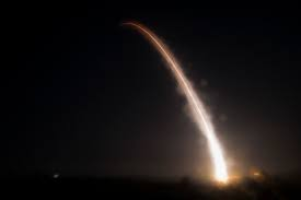
On the table at the two days talks in Vienna is the 2010 New Start treaty, which limits the number of Russian and US deployed strategic warheads (which are mounted on long-range delivery systems) to 1,550 each.
The treaty will be expiring in the next February, but it can easily be extended for a further period of five years. Vladimir Putin has said that he is ready to extend the treaty, but the Trump administration has yet to make a final decision.

Anthony Morris covers stories related to politics and regional developments. His in-depth reporting about governance and reforms makes him stand out in regional journalism, with a deep analysis of political trends and their impact on Caribbean communities.