

Last Updated on April 18, 2020, 8:23 AM AST by Anthony Morris
Amid the global coronavirus pandemic and crisis, Cuban athletes have found out innovative ways to practice and workout while staying home.
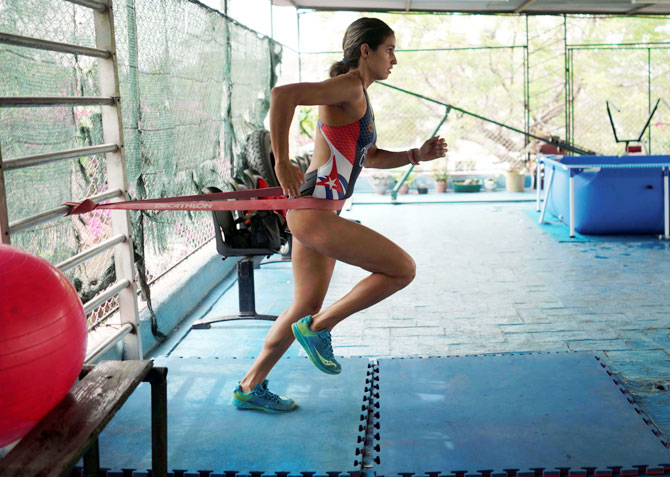
Among the innovative methods, some were seen when a triathlete swam in a tiny above-ground pool on her rooftop while having her waist attached to a wall with the resistance bands, and a baseball player was batting into a car tire.
Also, a boxer threw his punches into a bag of rice which was hanging from a mango tree.
In Cuba, which is famous for its resourcefulness and also its sporting prowess, professional athletes are now inventing new and innovative ways to work out and practice during the closure of common training grounds because of the coronavirus pandemic.
While most of these athletes are on a state salary of less than $40 per month, neither do these athletes afford to have professional equipment at their homes nor would the equipment be very easy to get in a country which is subject to a U.S. trade embargo and the state has the monopoly over imports.
Leslie Amat, a 27-year-old triathlete said that she had to invent some way to workout at home while she was sweating after a full workout on her home’s rooftop in Havana which is lined with potted plants.
In one corner of her rooftop, is the 3-meter long above-ground pool that was lent to her by her trainer’s 9-year old daughter.
She got that pool from her coach’s daughter when last month the authorities had closed down the Olympic-sized pools where she usually used to train.
She swims in the pool every day for thirty minutes using bands attached to the wall.
Then she runs on the spot by using the same bands attached to the wall before she hops onto her road bike made stationary with a stand.
A video of her improvised workouts, accompanied by the hashtag #quedateencasa (stay at home), had gone viral on social media this week.

Anthony Morris covers stories related to politics and regional developments. His in-depth reporting about governance and reforms makes him stand out in regional journalism, with a deep analysis of political trends and their impact on Caribbean communities.