




Last Updated on March 26, 2026, 7:09 PM AST by Anthony Morris
St. Kitts and Nevis is one of the nations supporting the resolution to call Slavery and Trans-Atlantic Trafficking of enslaved Africans a crime against humanity. The resolution is being led by the President of Ghana, John Mahama.
St Kitts and Nevis was one of the nations who voted in favour of the Resolution at the United Nations. The other votes in favour came from Caribbean and African nations on both sides of the world respectively.
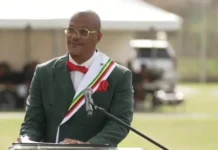
Dr Terrance Drew had committed his support to the resolution with the President of Ghana, President Mahama, during his recent Official State Visit to Accra.
The members of the Caribbean Community have supported the historic United Nations resolution: “Declaration of the Trafficking of Enslaved Africans and Racialised Chattel Enslavement of Africans as the Gravest Crime Against Humanity”. The resolution was tabled in the UN by the joint efforts of Ghana, St Kitts and Nevis and Saint Lucia on 25 March 2026.
The United Nations General Assembly voted to recognise the enslavement of Africans during the transatlantic slave trade as “the gravest crime against humanity.” With this resolution being recognised formally, the pave the way for healing and justice.
The resolution proposed by Ghana and supported by St Kitts and Nevis called for this designation. At the same time, the resolution also urged the UN member states to consider apologising for the slave trade and contributing to a reparations fund. It does not mention a specific amount of money.
The proposal was adopted with 123 votes in favour and three against. The votes against were casted by the the United States, Israel and Argentina.
Fifty-two countries abstained from a yes or a no vote. The abstaining nations included the United Kingdom and European Union member states.
Countries like the UK have for a very long time rejected the calls to pay reparations, and maintained the view that today’s institutions cannot be held responsible for past wrongs.
While UN Security Council resolutions are legally binding, resolutions from the General Assembly are not. However these resolutions do carry the weight of global opinion and 123 nations have acknowledged and supported the call to address the Trans Atlantic Slave trade as a crime against humanity

Anthony Morris covers stories related to politics and regional developments. His in-depth reporting about governance and reforms makes him stand out in regional journalism, with a deep analysis of political trends and their impact on Caribbean communities.