



Last Updated on August 12, 2020, 4:09 AM AST by Anthony Morris
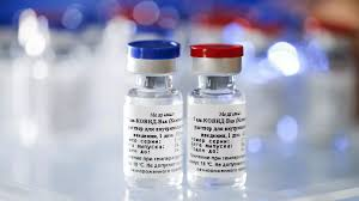
Russia while keeping its promise, and has approved a vaccine for COVID-19 for public use without conducting the final phase of human trials.
The vaccine developed by Russia is the first coronavirus vaccine in the world to be approved, though a Chinese vaccine was cleared for ‘limited use’ earlier.
However, that vaccine was meant to be given only to the soldiers of the People’s Liberation Army.
This new Russian vaccine has been developed by Gamaleya Institute, which is based in Moscow has cleared the regulatory approvals for the vaccine in record time, which is less than two months after it got into the stage of human trials and raised concerns over its effectiveness and safety.
The other vaccine candidates who are in the stage of human trials are not expected to be ready till before early next year.
The vaccine will be produced at a plant owned by Sistema, which is one of Russia’s biggest business groups apart from Gamaleya Institute’s facility.
Sistema has said that its facility had the capacity of producing 1.5 million doses per year, and this capacity would be ramped up.
However, for regions outside Russia, the Russian vaccine might take some time to be available.
A report on Tuesday reported that the head of Russia’s sovereign wealth fund said that requests for 1 billion doses of the vaccine were received from other countries and that international agreements were secured for producing 500 million doses per year.
However, the report did not name the countries which have shown interest in the vaccine.
The vaccine can be made available in India in two ways.
The Central Drugs Standard Control Organisation could ask Russia for conducting late-phase human trials, normally both phase-2 and phase-3, on an Indian population.
This is the normal requirement for all the vaccines which are developed outside of India.
Late-phase human trials are important because the efficacy of the vaccine can differ in different population groups.
This is the method which is being adopted by the vaccine candidate, which is being developed by Oxford University.
The Central Drugs Standard Control Organisation recently gave its go-ahead to the late-phase trials of the vaccine on Indian volunteers. The Oxford vaccine trials are expected to start this week.

Anthony Morris covers stories related to politics and regional developments. His in-depth reporting about governance and reforms makes him stand out in regional journalism, with a deep analysis of political trends and their impact on Caribbean communities.