


Last Updated on June 30, 2020, 5:33 AM AST by Anthony Morris
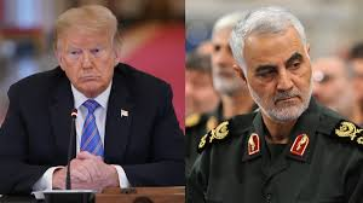
The Government of Iran has issued a warrant for the arrest of the US President Donald Trump for the killing of Iran’s top commander, Gen. Qasem Soleeimani, in January this year.
Iran has also reportedly asked Interpol for help.
The attorney general of Tehran, Ali Alghasi-Mehr, named Trump along with 35 others whom Iran has accused of being involved in Soleimani’s death.
He said that they are facing “murder and terrorism charges.” He added that he had asked Interpol to issue “red notices” against them, which is the highest level notice which can be issued by the Interpol for an individual for pursuing their arrest.
However, Trump is in no danger of arrest, and it is unlikely that Interpol would honour this request from Iran, as the guidelines of Interpol forbid it from undertaking any activities or intervention whose nature is political.
Red notices issued by the Interpol enable the local law enforcement authorities to arrest the individuals on behalf of the country which has requested, though the requesting country cannot force the country to extradite or arrest the suspects.
The Trump administration has not responded to Iran’s announcement so far.
Interpol did not reply immediately to a request for comment on the matter.
Soleimani was the leader of Iran’s Quds Force, the foreign operations wing of the elite paramilitary Islamic Revolutionary Guard Corps.
The Trump administration labelled him as a terrorist, and the US held him responsible for the deaths of the US troops in Iraq.
Soleimani, 62-year-old, was killed by a drone strike which was directed by President Trump in early January this year in the capital of Iran, Baghdad.
This move by the US sent regional tensions and oil prices soaring and also triggered a retaliatory attack by Iran on Iraqi bases which housed the US troops.
In emphasizing Soleimani’s significance, a defence analyst called the strike as the equivalent of Iran killing the United States Chairman of Joint Chiefs of Staff or the Director of the Central Intelligence Agency and taking credit for it.

Anthony Morris covers stories related to politics and regional developments. His in-depth reporting about governance and reforms makes him stand out in regional journalism, with a deep analysis of political trends and their impact on Caribbean communities.