
Last Updated on May 4, 2020, 7:21 AM AST by Anthony Morris
The decades-old US sanctions could not stop the Chinese alumni from helping Cuba in fighting the COVID-19 coronavirus.
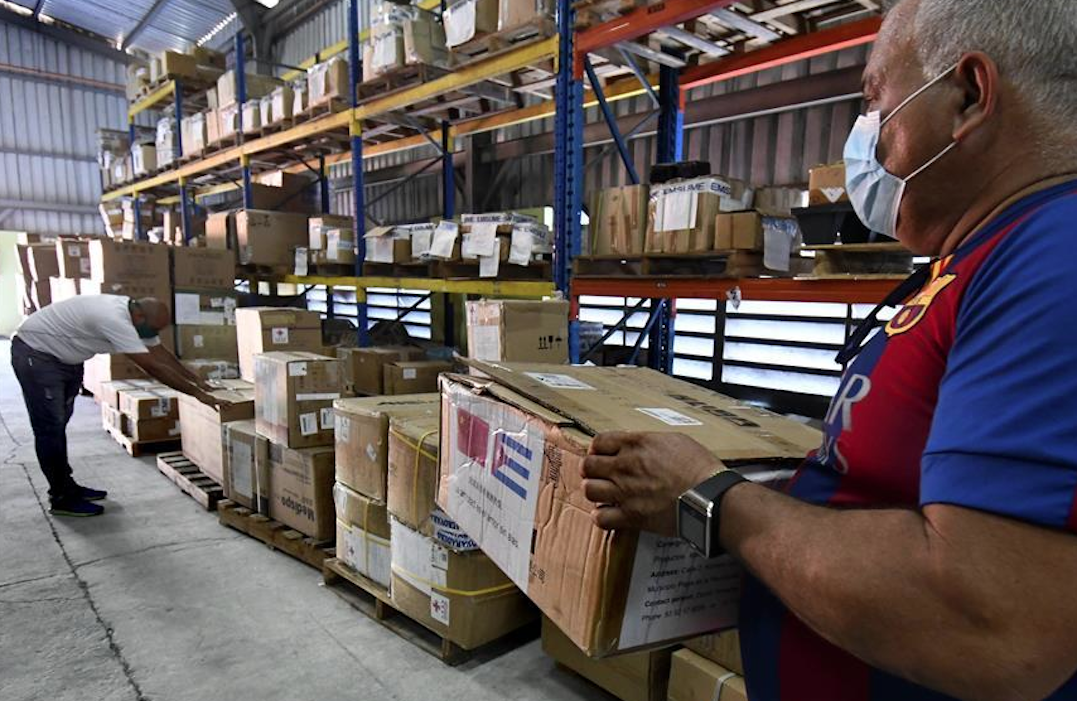
286 Chinese donors came together and raised more than 140,000 yuan (US$19,823) and purchased 420 medical protective outfits and 38,750 masks and sent the supplies to Cuba with the support and assistance of the Cuban embassy in China,
Chen Ke initiated the donation campaign.
Chen, a 30-year-old man from Southwest China’s Guizhou Province, said that the donors are mostly the Chinese students who had studied in Cuba between 2006 and 2016 under the Cuban Government scholarships.
The fundraiser had been launched at the end of March, after the launch, Chen was worried if the supplies could even be delivered to Cuba smoothly because of the existing US sanctions.
The United Nations has voted against the blockade against Cuba for almost 30 years in a row. Of the 193 UN members, 191 voted against the continuation of the embargo, Global Research reported. The exceptions were the US and Israel.
On April 1, the Cuban Government had said that a shipment of anti-epidemic materials donated by China to Cuba could not be delivered because of the US sanctions.
Chen said that however, as long as there was hope, we would not give up helping Cuba fight the epidemic.
Chen got in contact with the Cuban embassy in China and tried figuring a possible way of delivering the supplies to Cuba.
Finally, after a lot of discussions, a freight channel was found which could safely transport the supplies without American interference.
Chen added that he and the other donors appreciate Cuba for supporting their education generously and that they send love to Cuba from their hearts. This pandemic is a time to give back through helping Cuba fight against the pandemic.
Chen had also written a letter to the Cuban embassy based in China.

Anthony Morris covers stories related to politics and regional developments. His in-depth reporting about governance and reforms makes him stand out in regional journalism, with a deep analysis of political trends and their impact on Caribbean communities.