


Last Updated on January 20, 2020, 7:01 AM AST by Anthony Morris
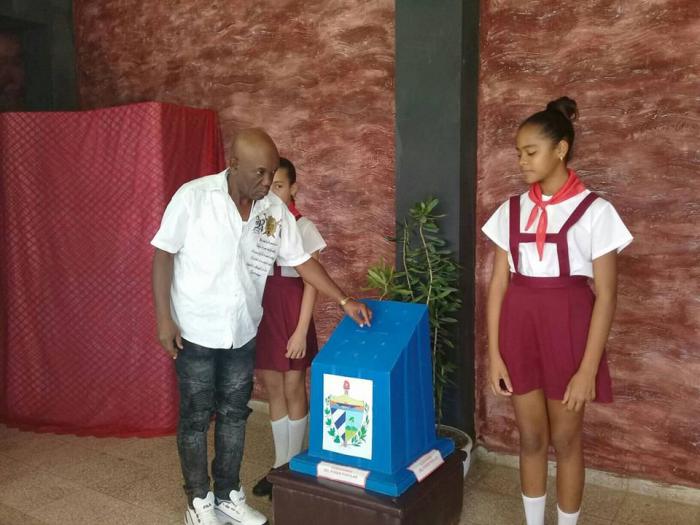
Recently, each Municipal Assembly of People’s Power was established in a discretionary school to choose the representative and bad habit senator, proposed by President Miguel Díaz-Canel by order of the new Constitution, in power since April a year ago.
As indicated by the newly established standards, in every region there is a Provincial Government, shaped by a Governor and a Provincial Council. Furthermore, as a delegate of the State, it has the “crucial strategic the monetary and social improvement of his/her domain, as per the general destinations of the nation, and goes about as facilitator between the focal structures of the State and the districts, in this manner adding to the harmonization of the interests of the region and its regions.”
The Governor is the most elevated official authoritative post in his/her area. Also, he/she answers to the National Assembly of People’s Power, the Council of State, the Council of Ministers and the Provincial Council, to which he/she renders records and reports on his/her administration.
To be representative or bad habit senator, you should be a Cuban resident by birth and not have another citizenship, have arrived at 30 years old, live in the area and appreciate full considerate and political rights.
The two positions are chosen by the representatives of the relating city gatherings of People’s Power, at the proposition of the President of the Republic, for the time of five years and as per the strategy built up by law.
Those chosen by immediate and mystery polling form will claim their situation inside the following 21 days, when the National Electoral Council (CEN) builds up.
The consequences of the political race were declared toward the evening at a question and answer session met by the National Electoral Council. Before that they were educated to the leader of the Republic and to the leader of the National Assembly of People’s Power.

Anthony Morris covers stories related to politics and regional developments. His in-depth reporting about governance and reforms makes him stand out in regional journalism, with a deep analysis of political trends and their impact on Caribbean communities.