




Last Updated on February 4, 2025, 1:22 PM AST by Anthony Morris
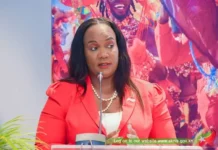
St. Kitts and Nevis’s Director of Public Prosecutions (DPP) Adlai Smith recently spoke on various issues related to justice and legal affairs in an edition of InFocus, including factors that prosecutors take into account when determining whether to charge an individual.
The event was held on the topic ‘Balancing Justice and Fairness’ on January 29, 2025.
Smith told the interviewer about the prosecutor’s code of conduct after he was asked about steps that are being taken to ensure that the members of the staff in the DPP’s office have the highest standard of ethical conduct.
DPP wants to have everything in written
“One of the things I have realized in our department is that there aren’t any written guidelines nor any written protocols,” the DPP said to start with, adding that his staff members are aware that he seeks to have written documents so that there is uniformity and stability when dealing with particular matters.
Smith said prosecutors’ code of conduct is something that he has been working on since 2024 as that would address the ethical standards of a prosecutor.
He said it is a lengthy document and he is trying to make it a formal document to be made part of his office library. Smith also said that he will make the document available to the public so that it spreads awareness about the considerations that a prosecutor takes into account when deciding whether to charge an individual.
Two-check step
The DPP said it is a two-check step. First, one has to look at the quality of evidence and determine whether there is a reasonable prospect of a conviction if it is taken to trial. The second stage is to determine whether it is in the public interest to bring the matter before the court.
Public interest includes things such as the amount of resources available or the type of matter brought before the court. Smith gave an example, saying if somebody stole something from a store for $2.
“Do I waste thousands of dollars in court’s resources to prosecute somebody for two dollars? That is an example to show whether something is in public interest,” the DPP said.
About the prosecutor’s code of conduct, Smith also said that he has been trying to pattern one similar to the conduct in Jamaica except that he wanted to update it to reflect modern changes in the law since the Jamaican one is a decade old and laws have changed since then. He also agreed with the interviewer who interjected that the situation in St. Kitts and Nevis is different than that in Jamaica.
Smith said he hasn’t gone to the extent he would have liked on the matter but given the circumstances, it is imperative that he moved sooner rather than later with the concern over a code of conduct.
St. Kitts and Nevis’s Director of Public Prosecutions is appointed by the governor-general, acting in accordance with the recommendation of the Judicial and Legal Services Commission.
During the InFocus programme, Smith also explained the public reporting system whereby citizens can produce dashcam or video footage of instances of reckless driving that can be used in court cases. This was one of the amendments to the Vehicles and Road Traffic Act that was passed in Parliament on January 30, 2025.

Anthony Morris covers stories related to politics and regional developments. His in-depth reporting about governance and reforms makes him stand out in regional journalism, with a deep analysis of political trends and their impact on Caribbean communities.