


Last Updated on April 25, 2020, 10:04 AM AST by Anthony Morris
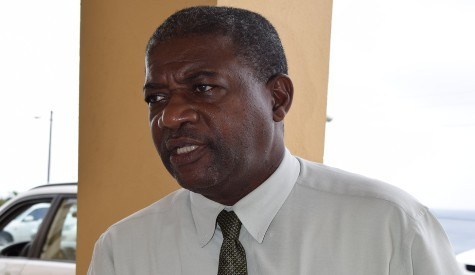
Dr Patrick Martin, former chief medical officer CMO, has called on the Government for the lifting some restrictions so as to prevent tsunamis of depression, anger social unrest and hunger.
The veteran paediatrician said in a commentary headlined: “Living With COVID-19, Part 1,” that the residents of St. Kitts and Nevis would have to become accustomed to living with the COVID-19 coronavirus.
He said that a safe and effective vaccine for the virus could still be around 12 to 18 months away.
Before that, the restrictions would have to be lifted from the public for preventing tsunamis of hunger, depression, anger and social unrest.
Martin holds the opinion that out of all the restrictions to be lifted, border re-opening would have the highest risk.
Dr Martin, while recalling that the first wave had commenced in the country in the mid-March, said that there would be a second wave of the COVID-19 importation, the possibility of high levels of illness, in-country spread and strained health and social care services.
Dr Martin also said that since then, more than two incubation periods of 14 days had passed with 15 confirmed cases of the COVID-19 coronavirus.
Local models had predicted an explosive surge of cases, overwhelming of hospitals with hundreds of deaths and thousands of patients.
Although, such a scenario has not occurred in the country up to this point.
Martin said, therefore, there is a window of opportunity to review and refine plans before the expected second wave hits.
He said that the WHO has recommended criteria for lifting restrictions and although they are sound but they are not new.
The former CMO said that every country should ensure that they have well-resourced capacities to detect, test, contact trace, contain, treat, protect the most vulnerable persons and communities, and communicate effectively.
The above said capacities according to him, define what it means to have a highly-performing health system in a well-run country.
“Consequently, St. Kitts and Nevis’ second wave plan should prioritize the maximum strengthening of health protection, health promotion, and prevention services. They include border control, surveillance, comprehensive testing,
facility for quarantine, workplace safety and health, and the social safety net, particularly essential food and medicine supplies, and psychological wellness,” Dr Martin said.

Anthony Morris covers stories related to politics and regional developments. His in-depth reporting about governance and reforms makes him stand out in regional journalism, with a deep analysis of political trends and their impact on Caribbean communities.